Press News
Tainan AI Robotics National Competition Reaches Record High Entries; Huang Wei-che Increases Champion Prize Money to Encourage Tech Talent
Jul 28, 2026
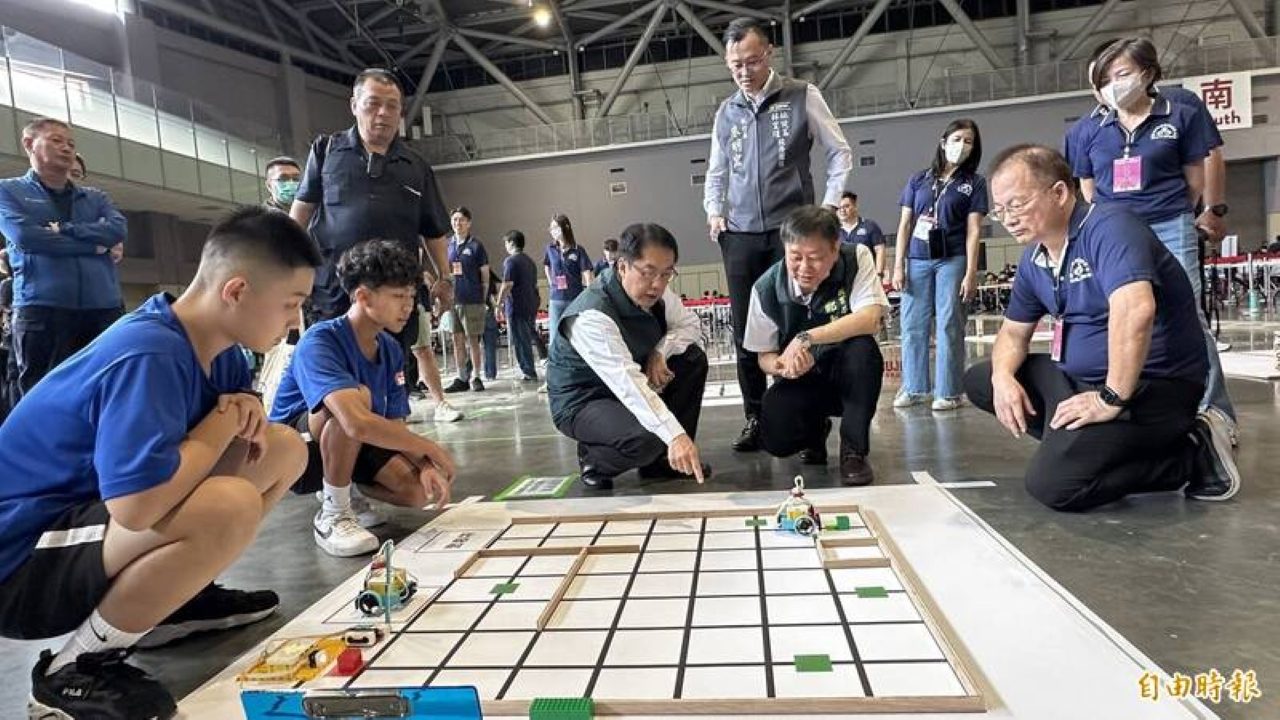
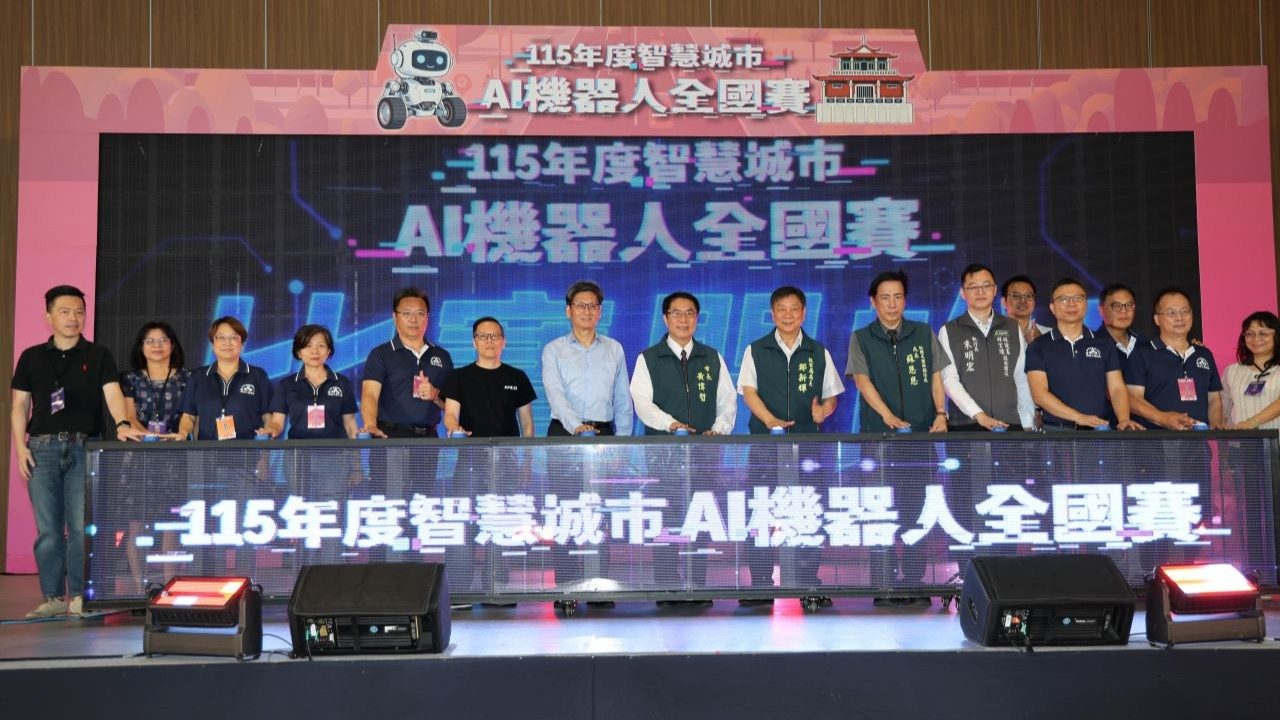
The Tainan City Government continues to promote emerging technology education such as AI, robotics, and drones. The “Smart City—AI Robotics National Competition,” organized by the Bureau of Education, launched today (28th) at ICC Tainan. The event attracted a total of 406 teams and 1,044 students from across the country to participate—an increase of 75 teams and 222 participants compared to last year, setting record highs in both participating teams and headcount. Tainan Mayor Huang Wei-che personally attended the opening ceremony to cheer on the contestants, announcing an increase in champion prize money for each category to encourage students to boldly engage in technology learning and cultivate future tech talent.
Huang Wei-che stated that AI and robotics are key global technology trends. Tainan is actively developing tech industries including semiconductors, AI, robotics, and drones, while continuously rooting technology education downwards, hoping to cultivate students’ technological literacy and innovative capabilities through diverse avenues such as courses, competitions, and study camps. He noted that summer vacation is the best time to explore interests and accumulate abilities, welcoming students nationwide to participate in AI, robotics, and drone-related activities held in Tainan to inspire creativity through hands-on learning and connect early with future technology development.
Huang Wei-che pointed out that this edition of the competition brings together elementary, junior high, and senior high school students nationwide to compete on the same stage, allowing students at different learning stages to display their learning achievements. He emphasized that the purpose of the competition is not merely to compete for awards, but more importantly to cultivate problem-solving skills, stimulate creativity, and expand horizons while accumulating experience by exchanging and learning with students from various places. He also expressed gratitude to AMD for sponsoring this competition for the first time, citing AMD Chairman and CEO Lisa Su’s Tainan origin as an example to encourage students to courageously dive into the tech field, looking forward to nurturing more outstanding AI tech talent from Tainan in the future.
To encourage students to bravely take on challenges and display their learning results, Mayor Huang Wei-che also announced an increase in champion prize money for this competition during the opening ceremony: the first prize for the senior high school category was raised from NT$7,500 to NT$10,000, the junior high school category from NT$5,000 to NT$7,000, and the elementary school category from NT$2,500 to NT$4,000, hoping to encourage more students to engage in tech learning, unleash creativity, and hone their skills during the competition.
The Bureau of Education stated that Tainan systematically promotes robotics education through the “2024–2027 Robotics Education Medium-Term Plan,” having currently established 110 key development schools for robotics education. Combined with 8 technology centers and the AI Creative Learning Center, a complete support system has been built spanning teacher training, curriculum development, equipment setup, and learning environments, allowing students to access programming and robotics hands-on practice directly at school. This competition planned five thematic tasks according to different learning stages from lower elementary to senior high and vocational schools, guiding students to progress step-by-step from basic manipulation and logical thinking to programming, mechanism integration, and scenario application, cultivating cross-domain integration and problem-solving capabilities.
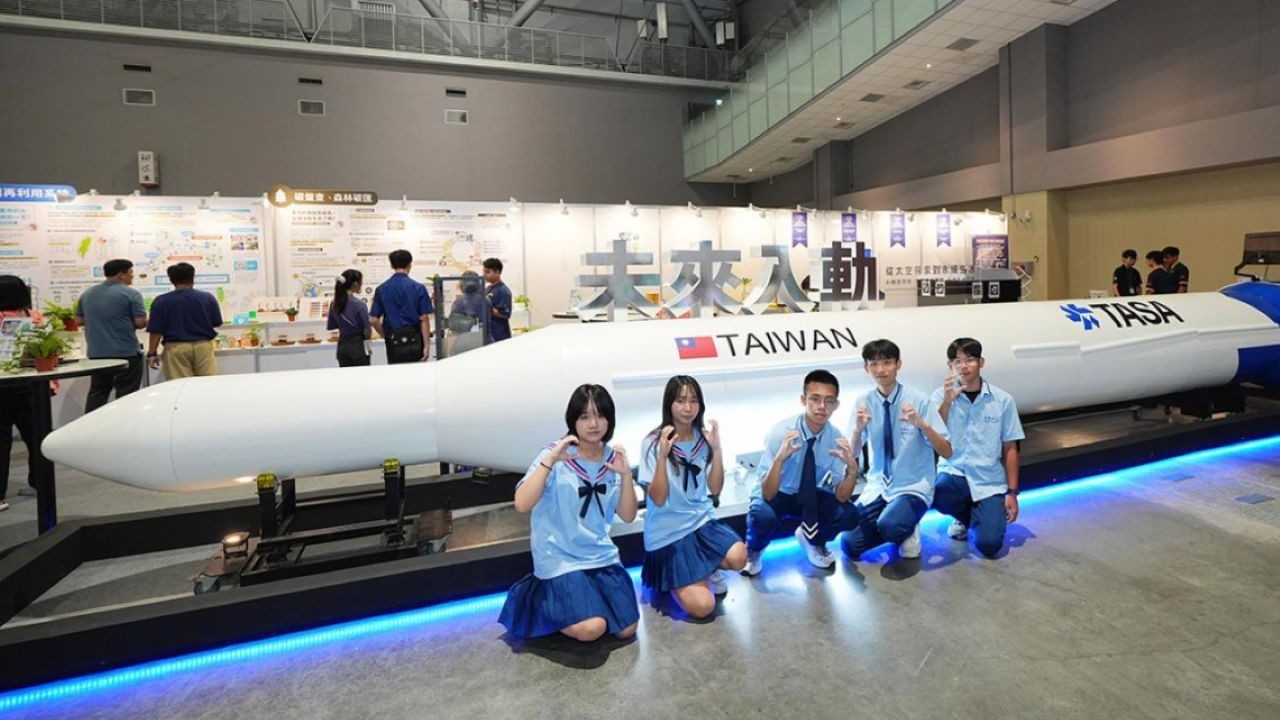
Sponsored by AMD for the first time, participating students challenged five thematic tasks tailored to different learning stages, requiring them to complete robot assembly, programming, testing, and debugging on site, demonstrating cross-domain integration and problem-solving abilities. On site, AMD and the National Nanke International Experimental High School robotics team—a former FRC World Regional Champion—set up experiential booths, allowing students to further understand AI technology and robotics applications.
The Bureau of Education pointed out that this competition planned five thematic tasks based on different learning stages, integrating scenarios such as smart agriculture, precision throwing, mathematical operations, logistics warehousing, and smart buildings into the contest. For lower elementary grades, “Smart Agriculture” requires robots to autonomously harvest and transport fruit; for middle elementary grades, “Throw for Luck” challenges autonomous navigation, turning, and precise ball throwing; for upper elementary grades, “Step by Step” combines robot control with basic arithmetic. The junior high school category “Smart Warehousing” requires following lines to push goods of different colors to designated areas; the senior high and vocational school category “Smart Buildings” features two robots completing relay transport and dropping tasks in autonomous and remote-control modes, progressively elevating programming, mechanism integration, and strategic application capabilities.
Participating students also shared their preparation and challenge experiences. Chang You-chia, an 11th-grade student from Yong-Ren Senior High School participating for the 3rd time, stated that he continuously adjusted programming logic and mechanical structures this year, looking forward to achieving great results with his teammates once again. Tsai Po-sheng, an 8th-grade student from Liantan Junior High and Elementary School competing in the junior high category for the first time, expressed that through repeated testing and debugging of programs, he learned patience in analyzing and solving problems. Lin Yi-hsun, a 6th-grade student from Hougang Elementary School, utilized extracurricular hours and holidays to practice, which not only enhanced her robot car operation skills but also applied basic arithmetic to competition tasks in practice. Tsai Meng-chun, a 2nd-grade student from the elementary department of Wagor International School in Taichung City, stated that by constantly adjusting the robot’s weight, speed, and turning angles, he gradually overcame challenges, looking forward to completing competition tasks together with his teammates.
News link:https://nvns.net/news_view.php?new_sn=137101&new_csn=1467
Venue Notice

Valid from now until July 31, 2026